We set up the drilling rig and push Shelby tubes into the Louisville clay before the sun hits the derrick. This is about getting undisturbed samples for direct shear and consolidation testing. The Ohio River floodplain leaves behind fat clays with high shrink-swell potential, and scattered limestone pinnacles from the St. Louis Formation complicate bearing surfaces. A shallow foundation design here cannot rely on textbook assumptions. We verify stratigraphy every 3 to 5 feet across the pad, cross-checking SPT blow counts from our SPT drilling program with lab-derived undrained shear strength. The goal is a footing geometry that stays within IBC Table 1806.2 presumptive values or justifies higher net pressure through site-specific data.
A shallow footing on Louisville clay can lose 40% of its bearing capacity during a wet spring if drainage isn't designed into the section.
Our approach and scope
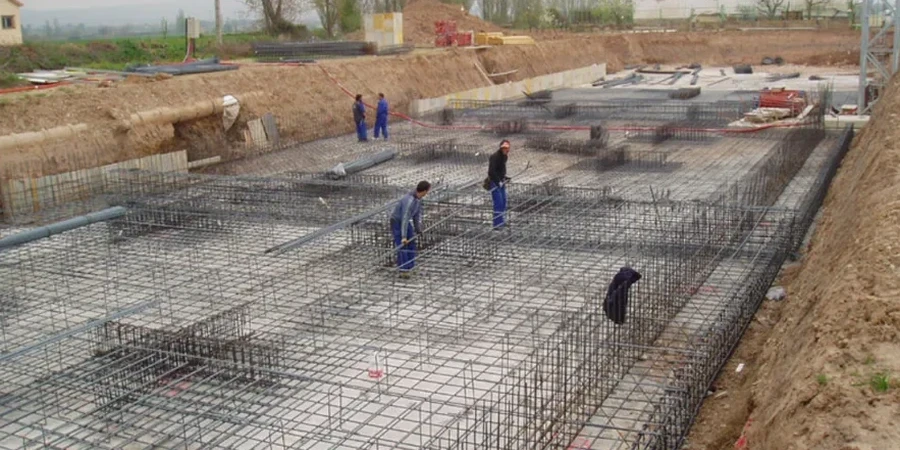
Local geotechnical context
Louisville gets 46 inches of rain annually, and the winter freeze-thaw cycles chew up poorly drained subgrades. The real risk is differential heave. A footing placed on uniform clay at one end and weathered shale at the other will move differently with moisture change. Karst voids add another layer — a shallow foundation over a soil-filled sinkhole can punch through under load if the raveling zone wasn't mapped. We run electrical resistivity profiles across every pad with suspect topography. The design must include a capillary break, positive drainage away from the footing, and in many cases a geogrid-reinforced subgrade to bridge any soft spots that open up during excavation. Skipping the site-specific consolidation test because 'it's just a slab-on-grade' is how you get 3/4-inch cracks in the drywall six months after occupancy.
Standards that apply
IBC 2024 Chapter 18: Soils and Foundations, ASCE 7-22 Chapter 12: Seismic Design (site class determination), ASTM D1586: Standard Penetration Test (SPT), ASTM D2435: One-Dimensional Consolidation Properties of Soils, ASTM D2487: Unified Soil Classification System
Complementary services
Bearing Capacity Calculation
Site-specific allowable bearing pressure using limit equilibrium and deformation-based methods. We supply separate values for strength (ultimate) and serviceability (settlement) limit states per IBC.
Settlement Monitoring & Verification
Pre-construction consolidation testing with incremental loading. We predict magnitude and rate of settlement using cv and Cc values from your site, not regional averages.
Subgrade Improvement Design
When the native clay doesn't meet the 2,000 psf threshold, we design compacted aggregate piers or cement-stabilized layers directly beneath the footing, validated with plate load tests.
Typical parameters
Common questions
What's the cost for a shallow foundation design on a single-family lot in Louisville?
For a typical residential lot with a geotechnical investigation including two borings and lab testing, the design and stamped submittal run between US$1,870 and US$2,990. The range depends on whether we need additional resistivity lines for karst screening or consolidation tests for deep clay.
How deep do footings need to be in Louisville?
IBC requires a minimum 18-inch embedment for frost protection. In practice, we often go deeper — 24 to 30 inches — to get below the active zone where moisture swings cause the worst shrink-swell movement in the local CH and CL clays.
Can you design a footing on fill material?
Yes, but only controlled fill placed under observation. We specify lift thickness, compactive effort (typically 95% of standard Proctor), and material gradation. Uncontrolled fill gets bypassed with deeper footings or piers — no exceptions.
What's the difference between net allowable and gross bearing pressure?
Gross includes the weight of the footing and backfill. Net is the pressure the soil actually feels from the structure load alone. We report net allowable pressure because that's what the structural engineer needs to size the footing reinforcement.