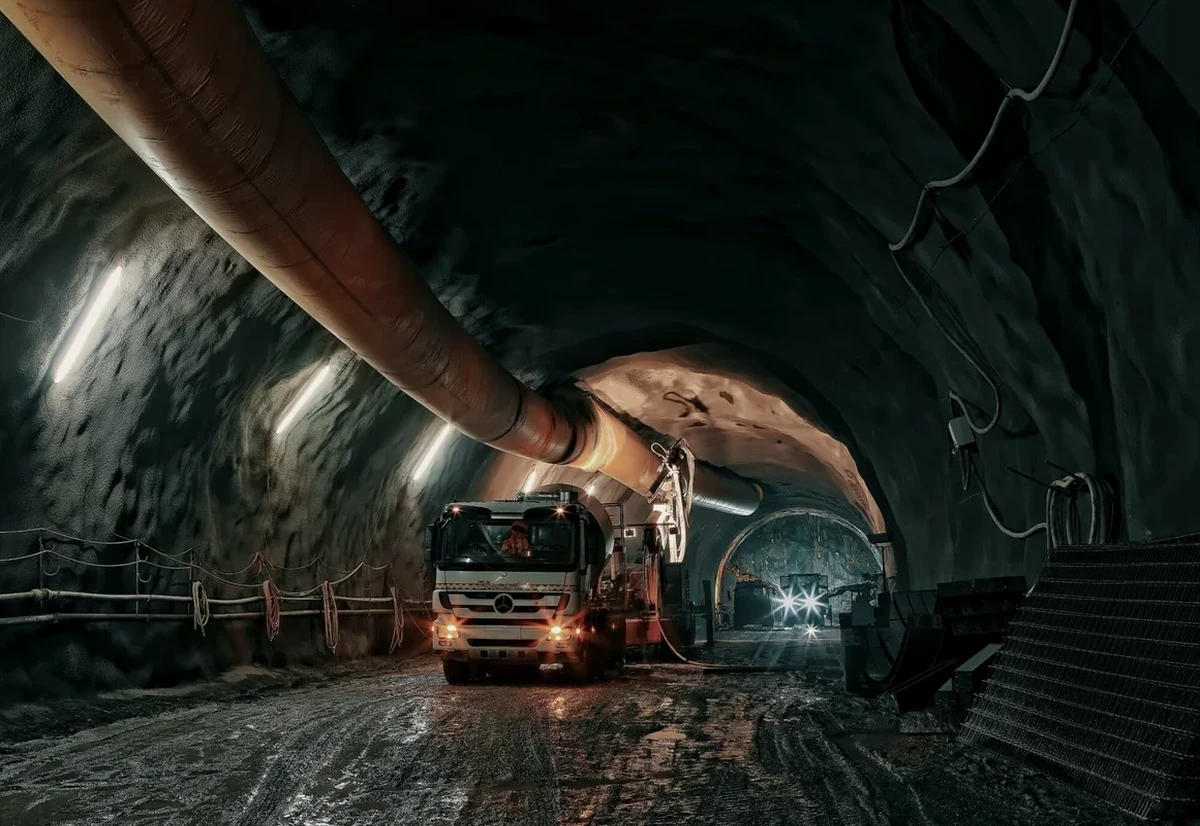
In Louisville you see soft soil issues on projects from the riverbank to the east side. The Ohio River floodplain left us with thick layers of alluvial clay and silt that get unpredictable real fast when you start opening up a tunnel face. A lot of the calls we get come after a contractor hits running ground just a few meters in. Our lab team runs the consolidation, triaxial, and index tests that feed directly into the face pressure calculations and settlement predictions, so the ground behavior is understood before the TBM ever starts rotating. When the alignment passes near the older brick infrastructure in Butchertown or under the I-64 corridor, we often pair the standard lab program with an in-situ permeability test to nail down the groundwater flow regime, because even a small misjudgment on pore pressure can stall a drive for days.
Soft ground in Louisville is not just about low strength—it is about how fast the pore pressure equalizes around the shield. That rate controls your settlement trough.
Our approach and scope
Local geotechnical context
Louisville sits in a seismic zone where the New Madrid and Wabash Valley systems can shake soft ground harder than many engineers expect for a mid-continent city. The IBC classifies parts of the metro in Seismic Design Category C, and the thick alluvial deposits amplify long-period motion. During a moderate event, a tunnel lining in soft clay can rack horizontally while the ground around it loses stiffness due to cyclic pore pressure buildup. Seed and Idriss-type cyclic evaluation on our triaxial samples helps quantify that degradation before the structural design is locked in. The second hazard that shows up regularly is groundwater. The Ohio River stage fluctuates 6 meters or more in a wet spring, and that directly changes the hydrostatic load on a shallow tunnel crown. If the face pressure or lining design does not account for the full stage range, you are looking at blowout risk on the high end and face collapse on a sudden drop.
Standards that apply
ASCE 7-22 (minimum design loads for tunnel structures), IBC 2021 (seismic design category and ground motion parameters), ASTM D1586 / D1586M-18 (Standard Penetration Test, referenced for borehole correlation), ASTM D2487-17 (Unified Soil Classification System), ASTM D4767-11 (CU triaxial test with pore pressure measurement), ASTM D2435/D2435M-11 (one-dimensional consolidation)
Complementary services
Soft ground characterization for TBM drives
Full index, consolidation, and strength testing on undisturbed Shelby tube samples from the tunnel horizon. We prepare lab-derived stress-strain curves and permeability profiles that feed directly into EPB machine parameter sheets and settlement models.
Seismic and consolidation settlement analysis
Cyclic triaxial and consolidation tests to evaluate long-term settlement under tunneling-induced drainage and short-term racking deformation during seismic events. Results are formatted for direct input into PLAXIS or FLAC models.
Typical parameters
Common questions
What lab tests are essential for a soft ground tunnel in Louisville’s alluvial deposits?
The core program includes Atterberg limits, grain size distribution, one-dimensional consolidation, and CU triaxial with pore pressure measurement. If the tunnel is below the water table—which it usually is near the Ohio River—we add permeability tests and a few CIU or UU tests to bracket the undrained strength envelope. For seismic design we run cyclic triaxial or resonant column tests depending on the IBC ground motion parameters.
How much does a geotechnical analysis for a soft soil tunnel project typically cost in Louisville?
A focused lab program for a short drive or a single critical reach usually falls between US$4,420 and US$8,500. A full alignment characterization with multiple boreholes, consolidation suites, triaxial testing, and seismic analysis can run from US$9,800 up to around US$16,850, depending on the number of samples and the complexity of the ground profile.
How do you handle groundwater fluctuation from the Ohio River in tunnel design?
We model the hydrostatic pressure envelope using the river stage records from the McAlpine Locks gauge. The lab program includes saturated permeability and consolidation tests at the highest and lowest expected effective stress, so the lining design can bracket both the drained and undrained loading conditions.
How long does the laboratory testing program take?
Consolidation tests run 5 to 10 days per sample depending on the load increments. A triaxial suite with three effective confining stresses takes about two weeks from setup to report. We schedule the full program so that index results come out in the first week, letting the design team start preliminary modeling while the strength and consolidation data are still being processed.